Dynamo Tech
Hardware Development
2025

Client
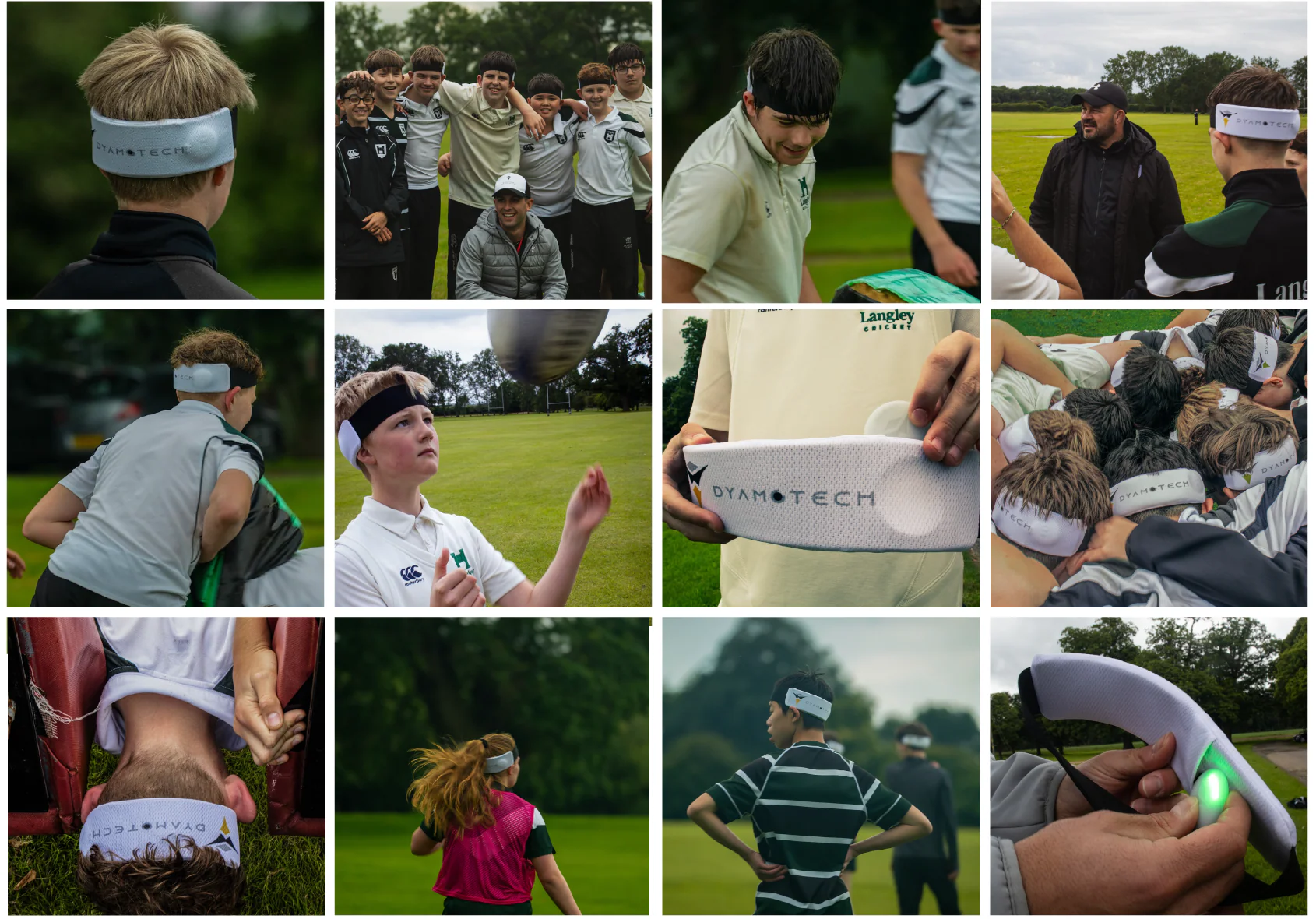
Dyamotech, an innovative sensing and data-tech company preparing to run a large-scale pilot at a large public school to validate their sensor-based behaviour analytics platform. Their goal is to streamline deployment, reduce operational friction, and support hands-on use by up to 50 students per session.
Challenge
Ahead of Dyamotech’s landmark pilot, the team required a robust, user-friendly, and scalable docking system capable of supporting:
- Charging, storing and handling 50 sensors per station
- Rapid turnaround between sessions
- Smooth adoption within a demanding school environment
- Three complete stations to allow simultaneous multi-class deployment
The docking stations needed to house custom electronics, enable data transfer, and integrate seamlessly into Dyamotech’s workflow, while also being designed, built, tested, and delivered within a tight timeline.
Wyzer was responsible for both hardware and electronics development, as well as all procurement, assembly and testing.

%20(1).jpeg)
Approach
Wyzer Innovation Services led an integrated mechanical-and-electronics development process, centred on reliability, rapid iteration, and pilot-ready usability.
1. Requirements Alignment & Kick-off
Wyzer began by establishing a detailed requirements pack to ensure complete technical alignment, covering:
- CAD files and reference units supplied by Dyamotech
- Power consumption and charging requirements
- Data transfer and interface specifications
- Environmental and durability expectations for school settings
This ensured the design could support 50 sensors per unit without compromising reliability or charging throughput.
2. Electronics & Docking Module Design
Wyzer designed:
- The full electronics system required to charge 50 sensors in parallel
- Modular docking inserts using a Pelican-style case as the housing
- A scalable architecture that allowed:
- A single-cell module
- A quad-cell block
- A full 50-cell array
- A single-cell module
This modular approach supported rapid iteration and allowed Dyamotech to review the work at key design gates prior to full build.
3. Contingency Exploration: Integrated Power Banks
To explore off-grid charging capability, Wyzer included a contingency path investigating whether portable power banks could be integrated into the dock without exceeding:
- Budget
- Available internal volume
- Thermal or power-management limits
This included additional R&D, materials, and labour and was treated as a stretch goal, with feasibility to be confirmed once all technical information from Dyamotech was received.
4. Prototyping, Assembly & Testing
Wyzer procured all required components and began the build and verification process:
- Functional prototyping of electronics
- Fit testing of single, quad, and 50-cell blocks
- Full integration inside modified Pelican-style housings
- Electrical safety and charging validation
- Data-transfer performance checks
- Final assembly of three complete units
All three stations were prepared for real-world use and validated for school-pilot conditions.
5. Final Handover
Wyzer delivered:
- Fully functional docking stations
- Documentation packs
- CAD outputs
- Electronics design files
- Operating guidance for pilot deployment
This ensured Dyamotech could begin their pilot with confidence and repeatable charging consistency.
Deliverables
- CAD and electronics designs for all docking modules and station architecture
- Three complete, fully assembled pilot-ready docking stations, each supporting:
- Storage of 50 sensors
- Parallel charging
- Data transfer
- Secure transport using Pelican-style protective housings
- Storage of 50 sensors
- Documentation and testing reports to support deployment at scale
Impact
This project enabled Dyamotech to run a high-capacity, multi-session pilot with minimal operational friction, significantly increasing adoption and enabling fast cycles of sensor distribution, charging, and data capture.
The docking stations created by Wyzer provided a repeatable, reliable, and scalable foundation for Dyamotech’s school-focused deployment model, supporting both present pilots and future expansion into other institutions.
Socials